
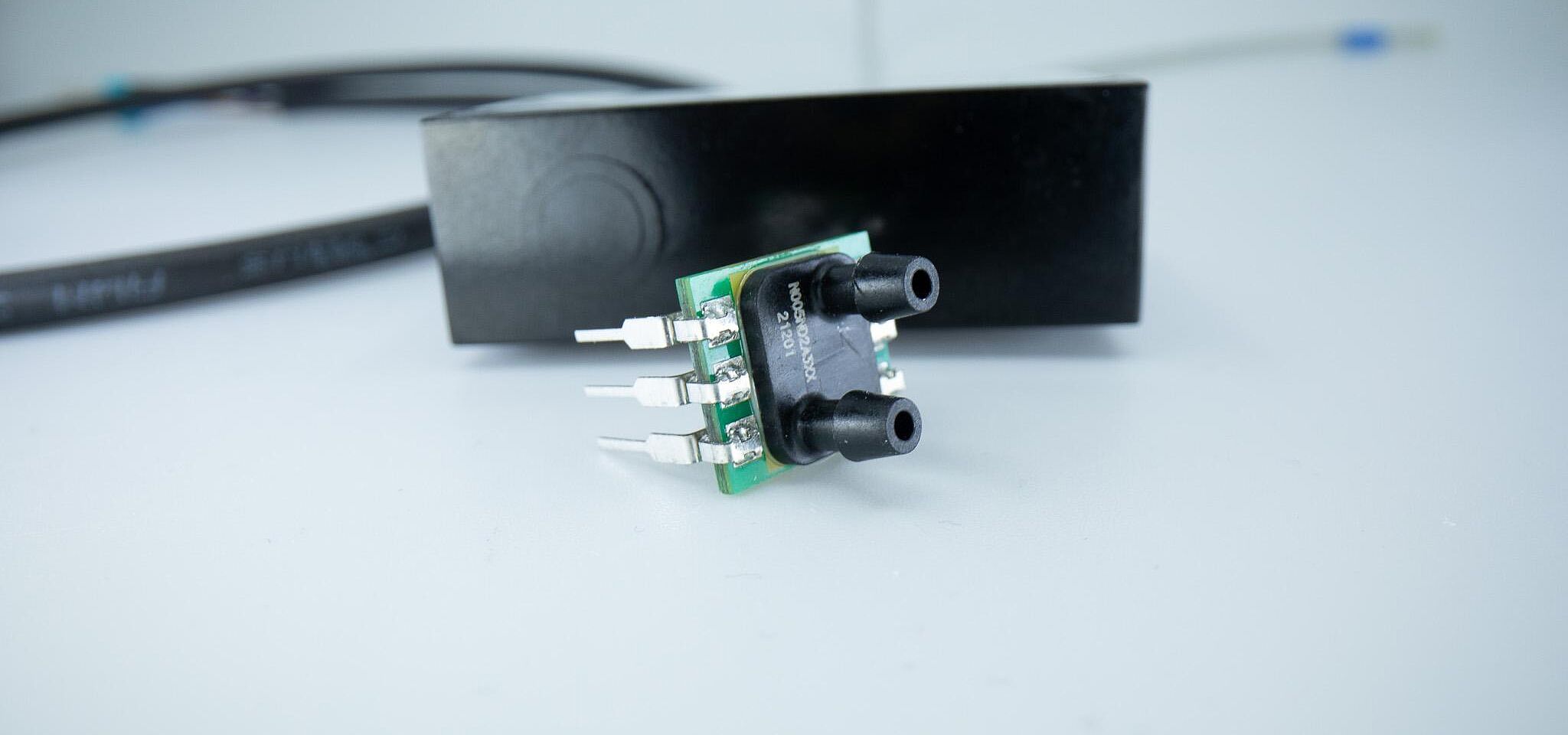
Level measurement with pressure sensors
At IBA Sensorik, we offer innovative solutions for the precise measurement and monitoring of fill levels across a wide range of applications.
With Honeywell Sensing and Safety Technologies as a partner, we work alongside one of the market leaders in sensor technology. Pressure-based measurement is a proven method for accurately monitoring and controlling fill levels in containers.
Hydrostatic level monitoring
Hydrostatic level monitoring
When measuring fill levels, pressure sensors use the hydrostatic pressure of the medium within a container to determine the liquid level. The basic measurement principle works as follows:
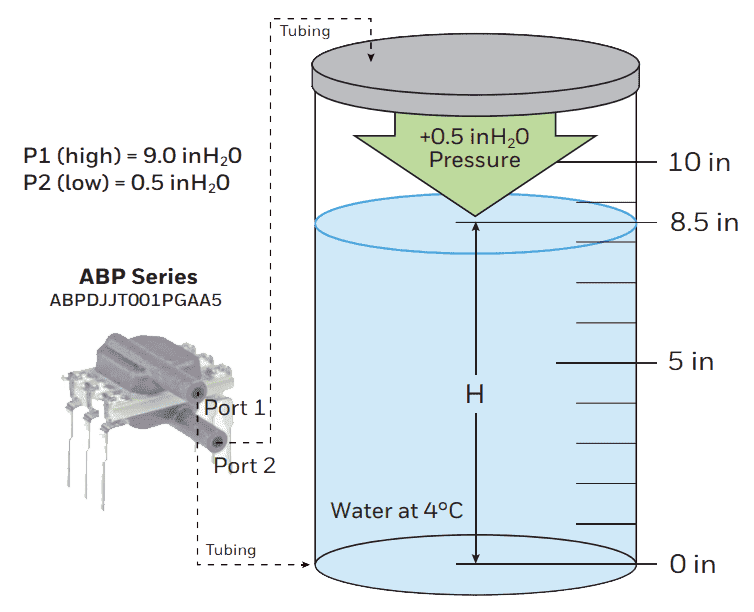
- Measurement of hydrostatic pressure: The pressure sensor is installed at the bottom of the container, where it measures the hydrostatic pressure of the medium. This pressure is directly proportional to the height of the liquid column above the sensor.
- Conversion to fill level: The measured pressure is converted into a fill level value. This is achieved through internal calibration while taking the density of the medium into account.
- Signal transmission: The calculated fill level is transmitted as an electrical signal to an evaluation system or control unit, where it is displayed or used for further process control.
Honeywell pressure sensors feature an additional gel coating that protects the electronics, allowing them to be used with non-corrosive liquids such as water and saline solutions, as well as in applications where condensation may occur.
For aggressive media, indirect measurement via an air column is possible, avoiding direct contact between the sensor and the medium.
With our affiliated production facility, we are able to assemble, modify or develop sensors individually to meet your specific requirements.
Our long-standing employees ensure the high quality standards required for the manufacture of highly sensitive components. Continuous expansion and modernisation of our machinery, combined with ongoing employee training, ensure that our production processes remain state of the art.
- Temperature: The temperature of both the measured medium and the surrounding environment can influence pressure and, consequently, measurement accuracy. It is therefore important to monitor temperature and apply compensation where necessary.
- Humidity: High humidity levels can lead to condensation, which may affect measurement accuracy. The measuring system should therefore be adequately protected against moisture.
- Vibrations: Strong environmental vibrations can impair measurement accuracy. It is recommended to install the measuring system in a stable location and minimise vibration exposure.
Our solutions
Our product range includes a wide variety of pressure sensors and measurement systems for level monitoring.
We provide high-quality sensor solutions for diverse applications and environmental conditions, including demanding industrial environments.
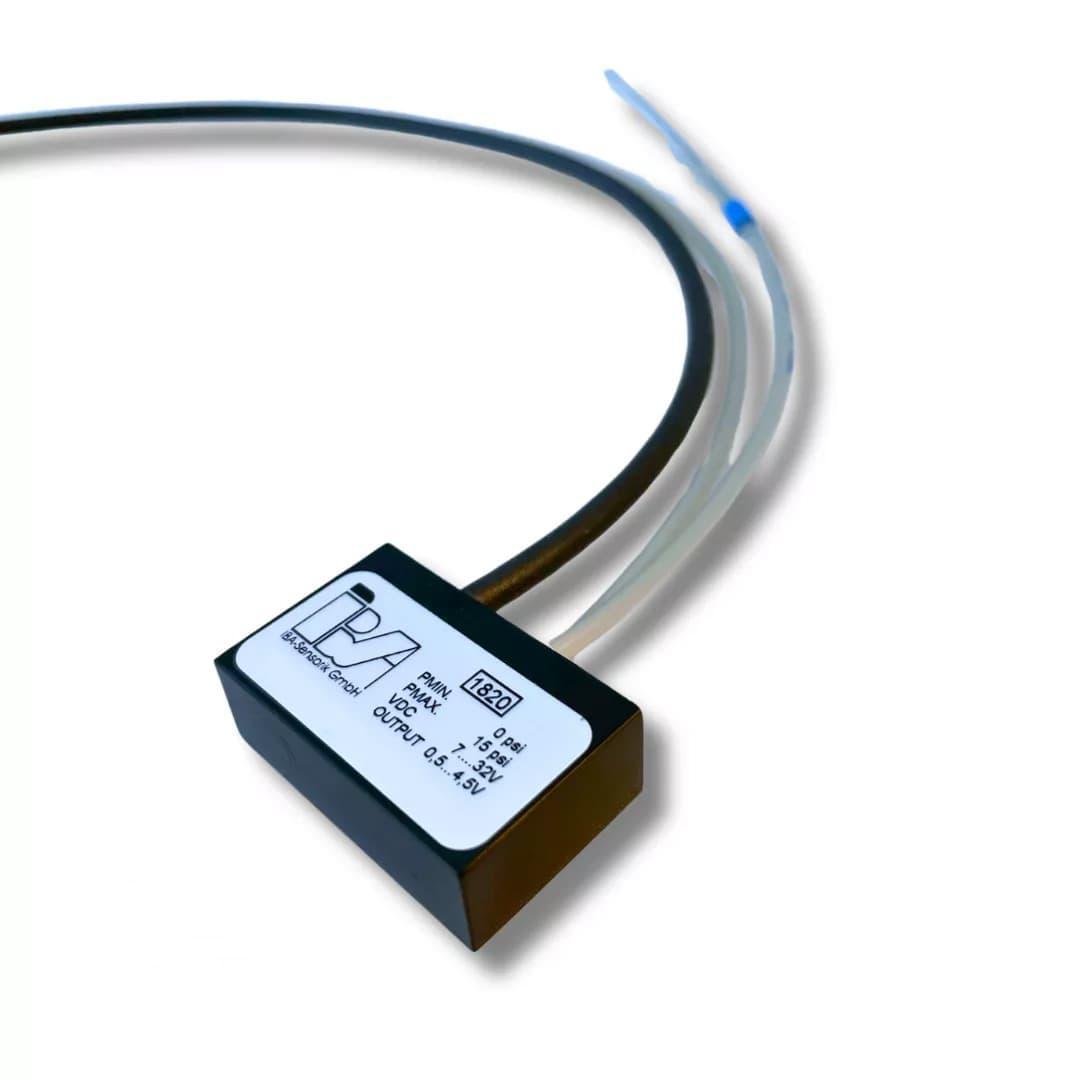
Our plug-and-play solutions
Our compact level monitoring unit is designed for precise measurement applications.
The electronics, including the pressure sensor and LED voltage indicator, are encapsulated in a plastic housing to provide complete protection against dirt and moisture. Ports 1 and 2 are each equipped with hose connections, and the cable outlet can be customised to meet customer-specific requirements.