Resistance temperature detectors (RTD)
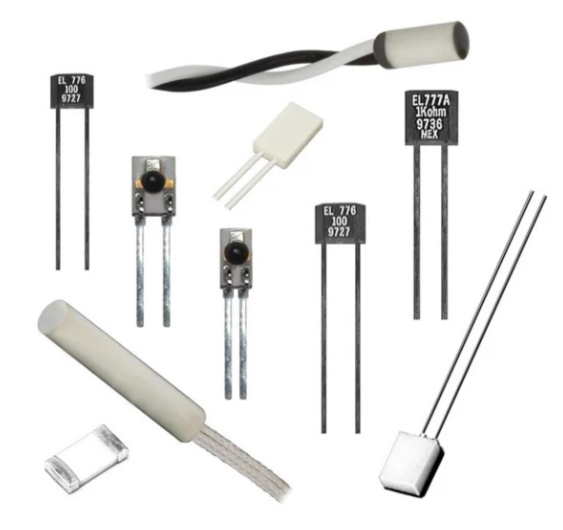
RTD (Resistance Temperature Detector) resistance temperature sensors are based on the principle that the electrical resistance of a metal changes with temperature. Overall, RTD resistance temperature sensors are a popular choice for many temperature measurement applications due to their accuracy and stability. RTDs are often made of platinum, as platinum exhibits a stable and linear change in resistance with temperature.
Potential applications
Temperature measurement for monitoring, compensation, and control in:
- Process control
- Motor windings and bearings
- Battery packs
- Furnaces and kilns
- Environmental chambers
- Autoclaves
- Temperature range: RTDs can be used in a wide temperature range, typically from -200 °C to +850 °C, depending on the specific type and design.
- Accuracy: RTDs offer high accuracy and stability over a long period of time, making them ideal for precise temperature measurements.
- Linearity: The resistance of an RTD changes relatively linearly with temperature, which facilitates calibration and interpretation of the measured values.
- Connection types: RTDs can be supplied in various configurations, e.g., as 2-wire, 3-wire, or 4-wire connections, with the latter two options being used to minimize the influence of wire resistance.
| Available series |
|---|
| HEL-775 Series |
| HEL-700 Series |
| HEL-777/776 Series |
| 700 Series |
| HRTS Series |